Chances are, you've been with the same bank for years. After all, it's easier to stick with the checking account you have now than to switch to a new one. But every once in a while, it's worth looking at what else is out there.
Even if you're mostly satisfied with your current bank, you may find that a different one better fits your needs, whether with lower fees, higher interest rates, superior in-person services, or more-attractive premium account packages that layer on the perks as your wealth grows. Or you may choose to stick with your current institution for everyday banking and open a savings account or certificate of deposit at an online bank or credit union, taking advantage of high yields on your extra cash.
You'll find plenty of great options to consider here. With the help of LendingTree, which collects deposit-account information, we've analyzed interest rates, fees, balance requirements and other features of accounts at national banks, credit unions, online banks and regional banks, and we've named winners in each of those categories. We've also highlighted two institutions that may be strong choices for customers in each of four profiles: Retirees, high-net-worth clients, travelers and families with kids.
For regional banks, we chose one winner in each of four areas: The Northeast, the Midwest, the South and the West. Interest rates change frequently, so before you commit to any of these accounts, check the current yield. Yields and other terms listed here are as of early July.
Regional banks have between $10 billion and $100 billion in assets and serve specific areas. As a result, they often have more-personalized customer service than you may find with a national bank, and they often reinvest money into the community.
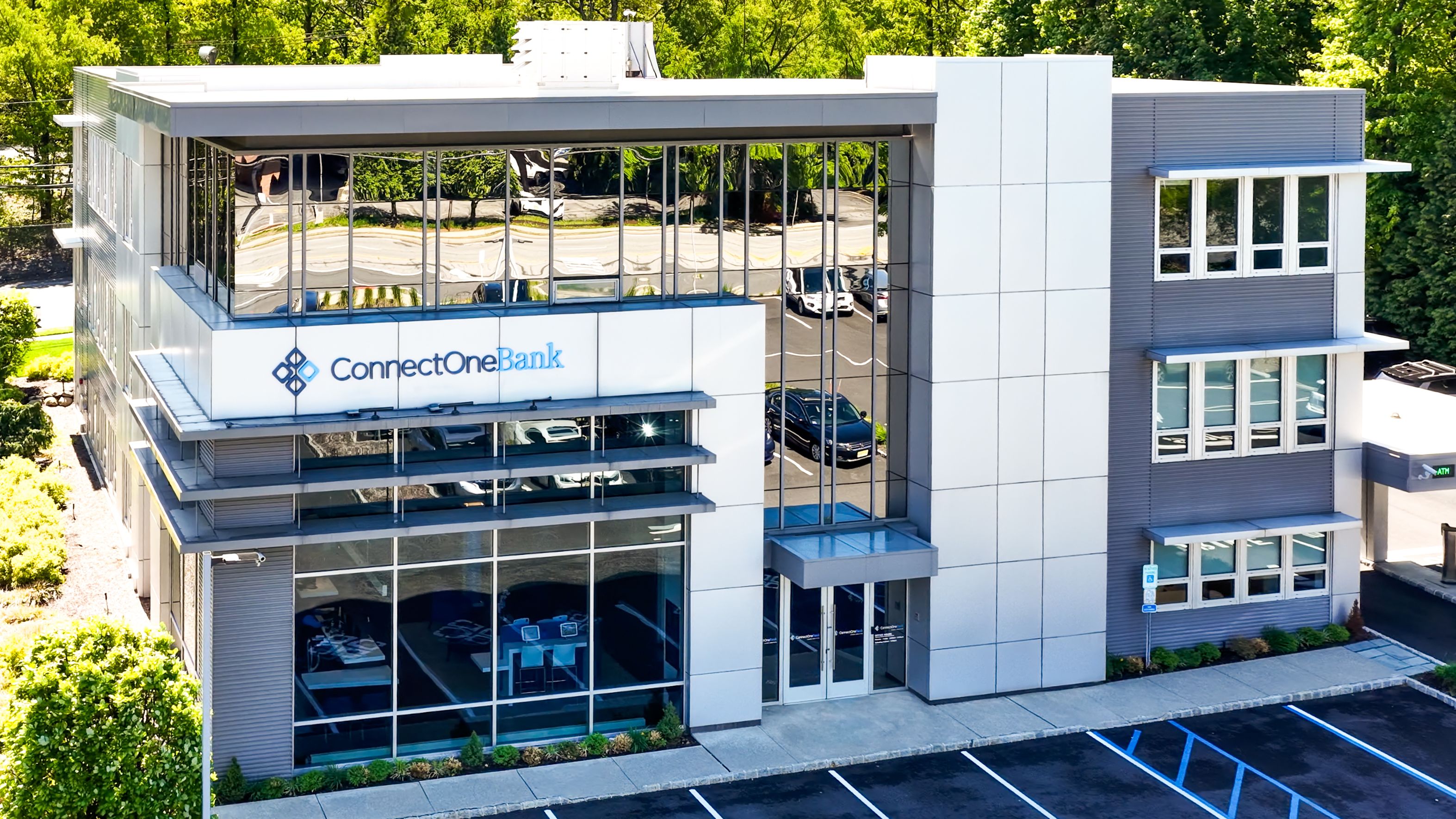
Best in the Northeast: ConnectOne Bank
Where it is: More than 60 locations across New York, New Jersey and South Florida.
Totally Free Checking is, as the name implies, free of monthly fees. It's a simple account, but it allows customers to send money via Zelle. Simply Better Checking also charges no monthly fee, and it reimburses up to $10 monthly in out-of-network ATM fees if you use direct deposit and maintain a $500 average daily balance.
Consumer Interest Checking yields 1.15% on balances of $1,000 or more, and it reimburses up to $10 a month in ATM surcharges if you use direct deposit and have an average daily balance of $1,000. (By keeping your balance at $1,000 or more, you'll also skip the $10 monthly fee.)
Among ConnectOne's savings options, Connect Money Market has a 2% yield, or 2.1% for balances above $25,000. It requires a $1,000 minimum opening deposit, and you need to maintain an average daily balance of at least $5,000 to avoid the $10 monthly fee. Connection Plus Savings offers a 3% yield on balances of at least $2,500, and the CDs come with a relatively low deposit requirement of $500. The four-month penalty-free certificate pays 4%.
Best in the Midwest: Old National Bank
Where it is: About 350 locations in Illinois, Indiana, Iowa, Kentucky, Michigan, Minnesota, North Dakota, Tennessee and Wisconsin.
Old National has four popular checking-account options, including one for students and another for customers 50 and older. ONB Everyday Checking is the basic account for everyday needs, and a recent promotion offered a $600 bonus for signing up and making $12,000 in direct deposits in the first four months. The account comes with a $6.95 monthly fee, but you can get it waived with $500 in monthly direct deposits, a daily balance of $500, a $1,500 daily balance across all qualifying accounts with Old National, or 15 or more debit card transactions during the statement cycle.
ONB Preferred Checking offers free standard checks, and the bank won't charge you for the first five monthly transactions at out-of-network ATMs (but you may pay fees to the ATM operator). Preferred Checking has a $15 monthly charge, but it goes to zero if you have a daily balance of $5,000 in the account or $25,000 across all eligible accounts.
Old National offers a variety of savings options, including a savings account for kids. Among CDs, one with a four-month maturity recently had a 4% yield, with a $500 minimum deposit requirement.
Best in the South: FirstBank
Where it is: About 90 branches across Tennessee, Kentucky, Alabama, Georgia and North Carolina.
Essential Checking includes the basics for no monthly fee, while the free FirstRewards Checking pays a yield of 1.51% on balances up to $25,000 (0.55% on the portion of the balance higher than that) if you meet certain monthly requirements: making 10 debit card purchases, having one qualifying transfer into or out of the account, and receiving e-statements. The account also refunds out-of-network ATM fees.
Swipe Smart Checking, another free account, may make sense for people opening their first account or students who primarily use a debit card (the account doesn't offer paper checks). Other checking accounts include USA Checking for Seniors, for those 62 and older, and Interesting Checking ($8 monthly fee if your balance falls below $1,000), offering a yield of 0.41% on balances of $1,000 to $24,999, 0.45% on balances of $25,000 to $49,999, and 0.5% on higher balances.
For savers, FirstBank's options include FirstUp Savings, yielding 3.82% on up to $25,000. The bank waives the $5 monthly fee if you have a minimum balance of $50. The six- and 30-month CDs ($500 minimum deposit) yield 3.8%, and the Consumer Fed Funds Money Market account recently paid 1.46% on balances up to $99,999, and 2.93% on higher balances (you avoid the $10 service fee if you have an Essential Checking account or keep at least $100,000 in the money market account).
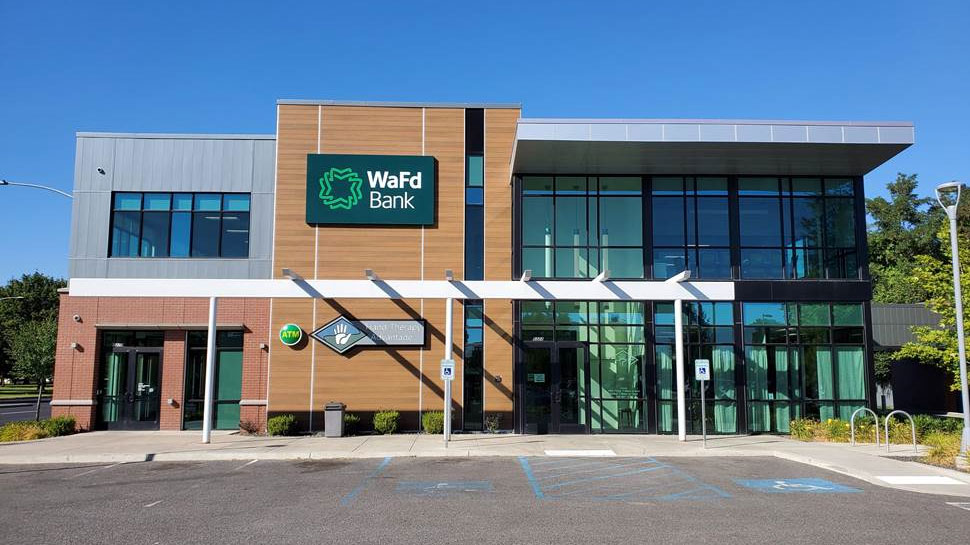
Best in the West: WaFd Bank
Where it is: More than 200 branches across Arizona, California, Idaho, Nevada, New Mexico, Oregon, Texas, Utah and Washington.
Free Checking is WaFd's basic checking account, and Rewards Checking is an elevated version that comes with a $6 monthly fee in exchange for perks such as a discount of 5 cents per gallon on gas at Shell stations, cell phone insurance, free access to the Greenlight program for managing money with kids, and a credit-monitoring service.
Premium Rewards Checking has a $9 monthly fee but comes with more benefits, including dark-web monitoring, 24/7 roadside assistance and telehealth services. Interest Checking offers those benefits plus a yield as high as 0.25% (on balances of $250,000 or more). It waives the $12 monthly fee if you have a $5,000 average daily balance or $50,000 across eligible accounts with WaFd.
WaFd's Savings account, yielding 0.1% on balances of at least $100, is free for minors; otherwise, you can avoid the $3 monthly fee by maintaining a balance of at least $100. Start Savings offers a 5% yield on a balance up to $500, 2.47% on the portion of the balance between $500 and $1,000, and 0.1% on larger amounts. (To open this account, you must have a WaFd checking account.)
If you're looking for better yields on big balances, check out the money market accounts, such as the High Yield Money Market (yielding as much as 2% on $500,000 or more) and CDs. Recently, a certificate with a seven- or 13-month maturity yielded 4% ($1,000 minimum deposit).
Methodology
With data from LendingTree, which collects deposit-account information, as well as from financial institutions and other sources, we evaluated national banks, credit unions, online banks (including online accounts from brokerage firms) and regional banks. We reviewed checking accounts, savings accounts, money market deposit accounts and certificates of deposit.
We looked at features including interest rates; minimum deposit and balance requirements; monthly maintenance fees and the ease of waiving those fees; ATM benefits, such as waived or reimbursed fees for out-of-network withdrawals; free or discounted benefits, such as personal checks, cashier's checks, paper statements and overdraft-protection transfers; overdraft fees; and online and mobile banking features, such as the availability of peer-to-peer payment services. Yields and other data listed in the article are as of early July.
Note: This item first appeared in Kiplinger Personal Finance Magazine, a monthly, trustworthy source of advice and guidance. Subscribe to help you make more money and keep more of the money you make here.
More Best Banks
- Best National Banks
- Best Credit Unions
- Best Online Banks
- Best Banks for Retirees
- Best Banks for High-Net-Worth People
- Best Banks for Travelers
- Best Banks for Families with Kids